
Technical Requirements

Problem
Our platform does not properly support landlords with multiple LLCs.
This growing segment represents a missed opportunity for expansion and impact. Those who try to navigate our platform with multiple LLCs encounter frustrating roadblocks, leading to dissatisfaction and a burdened support team.
We specifically focused on helping landlords with multiple LLCs who are trying to use our platform to collect rent payments because that’s largely where most reported issues stemmed from.
Demystifying Multiple LLCs:
Understanding Landlord Motivations
Why do landlords set up multiple LLCs in the first place?
While our platform currently faces limitations serving landlords with multiple LLCs, it's crucial to understand why they adopt this structure. I conducted user interviews with landlords who have multiple LLCs, chatted with the Customer Success team, browsed Reddit threads, and explored landlord Facebook groups.
The key finding revolves around asset protection: as landlords accumulate properties, forming separate LLCs for each becomes a widely recommended strategy. This creates a firewall between personal and business assets, shielding individuals from potential legal challenges or financial liabilities stemming from specific properties.
Other benefits of forming an LLC include:
Simplicity: It’s very easy to form an LLC, requiring minimal paperwork and legal formalities
Straightforward Taxing: Income generated by the LLC is typically taxed on the individual level, similar to how personal income is taxed, rather than being subject to separate corporate tax rates
Professionalism: Increases the perception of being a ‘legitimate’ business
Anonymity: Maintains privacy by hiding the individual’s identity
What is the typical structure of a landlord's rental business when utilizing LLCs?
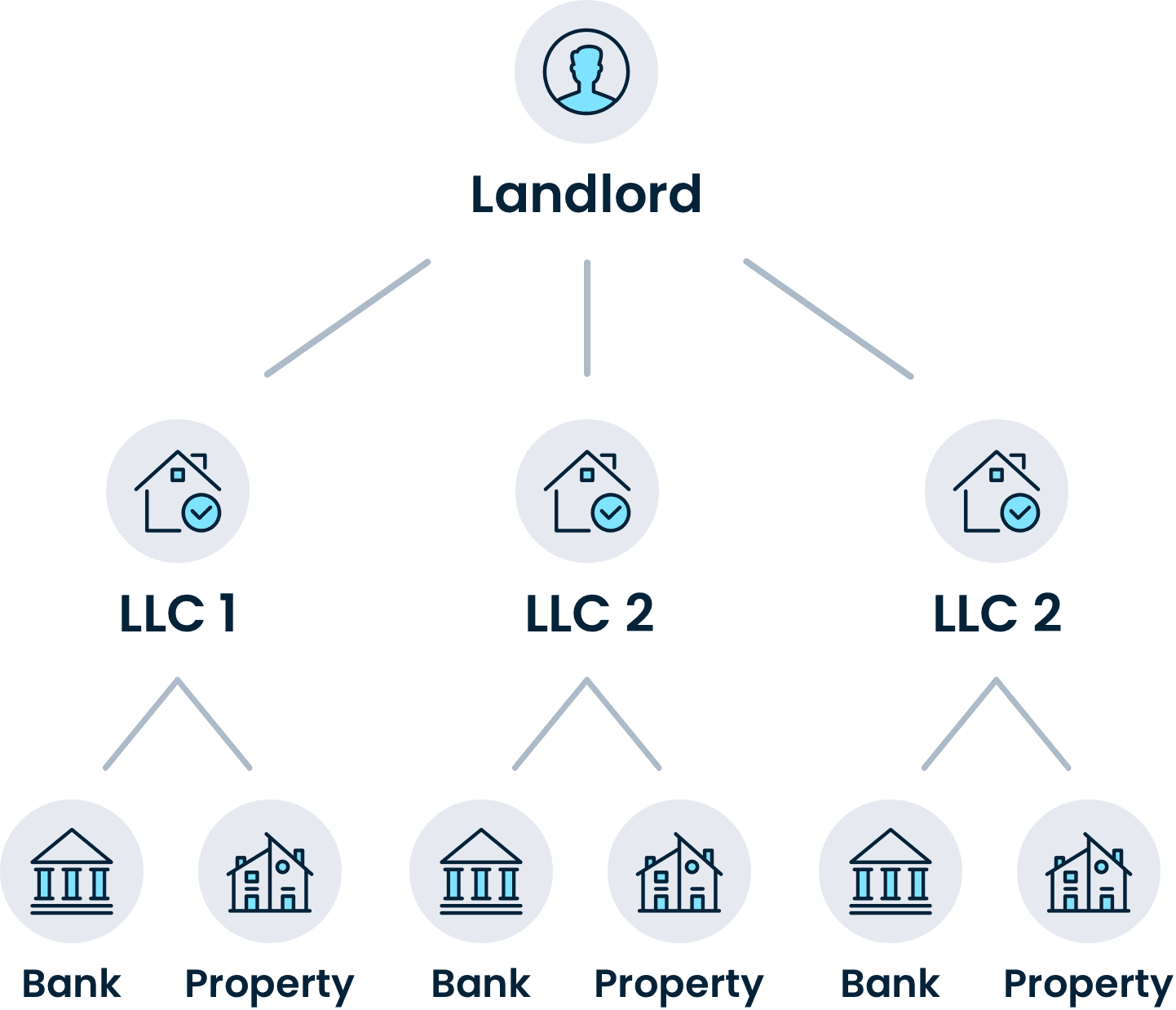
LLCs are the topmost level of a landlord’s business structure. Typically, one LLC is established for every one to two properties. Each LLC also has its own assigned bank account to collect rent to maintain the separation of funds.
This represents the current "mental model" of landlords with multiple LLCs, serving as a foundation for our solution brainstorming. By understanding this structure, we can generate targeted solutions that resonate with their specific needs and workflows.
How does our current rent payment system work?
To identify potential solutions for supporting landlords with multiple LLCs, I first had to understand the inner workings of our current rent payment system. I consulted my PM and the engineers and here's what I discovered:
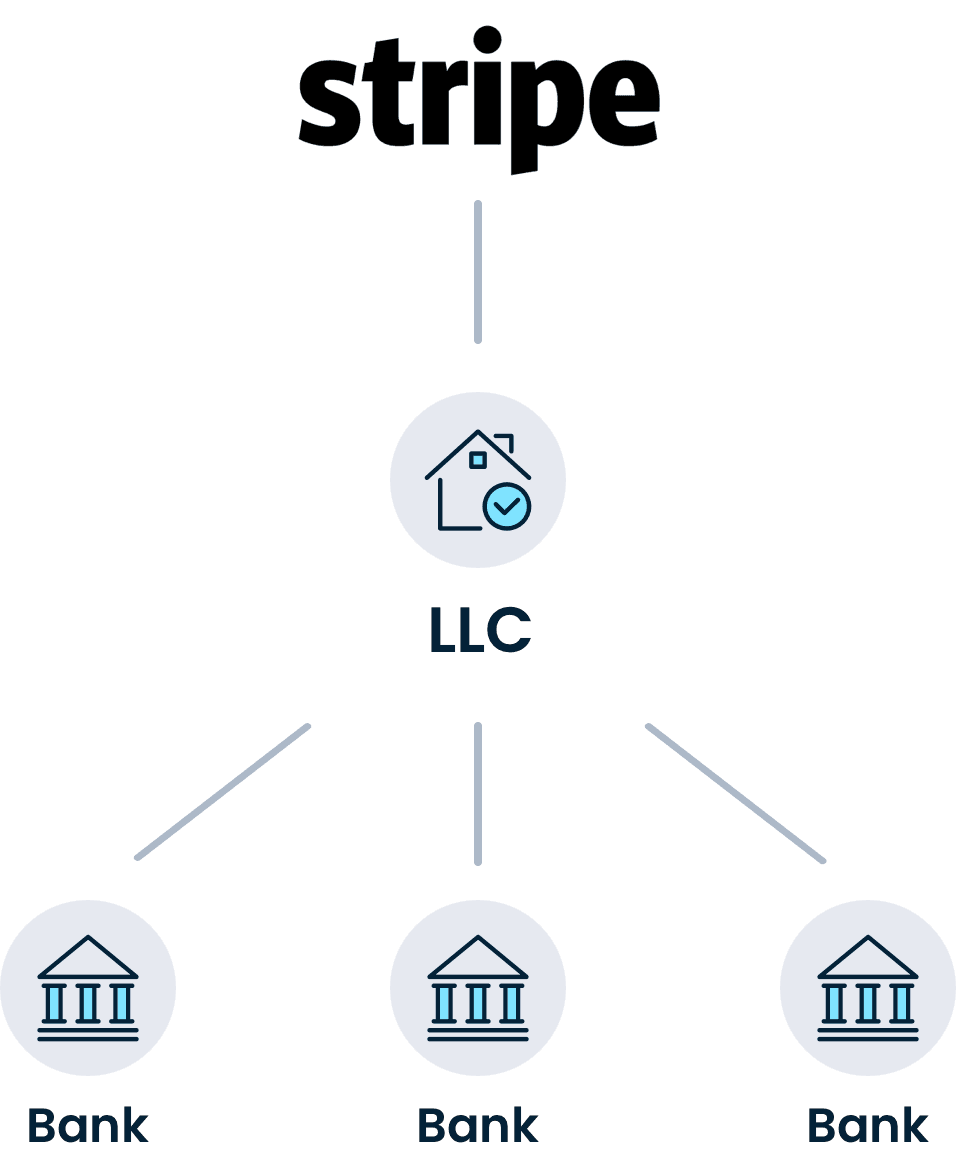
One LLC, One Bank Account
While adding multiple bank accounts is possible, they must all be linked to the same LLC. Disconnects between LLC and bank information trigger potential fraud flags from Stripe, creating roadblocks for landlords with diverse portfolios.
Stripe Connect Integration
We leverage Stripe Connect for seamless payment routing between renters and landlords. During setup, landlords are restricted to creating a single Stripe Connect account, which only allows for one LLC to be added.
Our Current Rent Payments System:
Limitations and Opportunities
What issues do landlords with multiple LLCs run into when using our platform?
Frozen Funds Nightmare
Triggered by Stripe's fraud flags, all rent deposits, regardless of LLC, get frozen, causing crippling delays. This isn't just inconvenient, it can financially jeopardize landlords relying on timely payments.
Verification Labyrinth
Clearing these fraud flags involves a tedious, manual process. Email explanations, document gathering, and specialist-assisted uploads to Stripe. Often taking days or weeks, this creates immense hardship and support backlog.
Overwhelmed Specialists
With only two support specialists handling numerous tickets, they're constantly inundated, further exacerbating response times and user dissatisfaction.
What are the consequences of these issues?
Landlord Churn
Frustrated users abandon the platform due to unreliable payments and sluggish support.
Negative Reviews
Unpleasant experiences translate to damaging online feedback, impacting brand reputation.
Operational Bottleneck
The manual verification process is inefficient, straining resources and hindering scalability.
Solution
Enabling rent collection for landlords with multiple LLCs
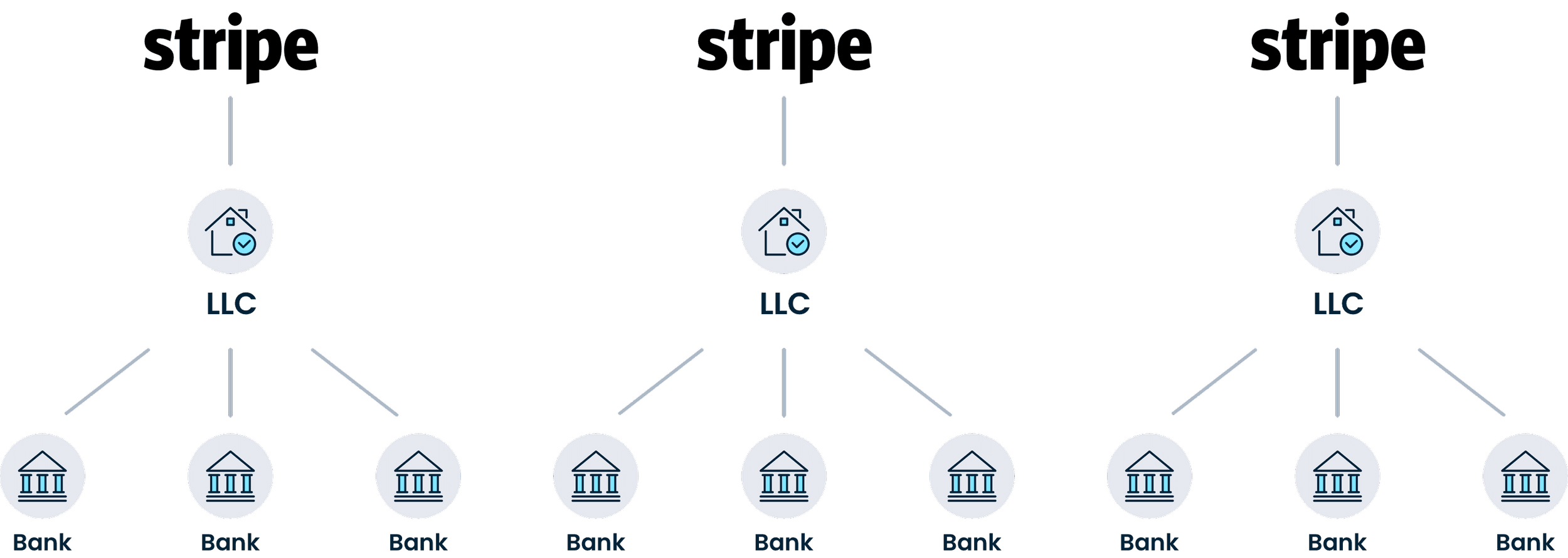
Here's what the engineers had to figure out on the backend with Stripe
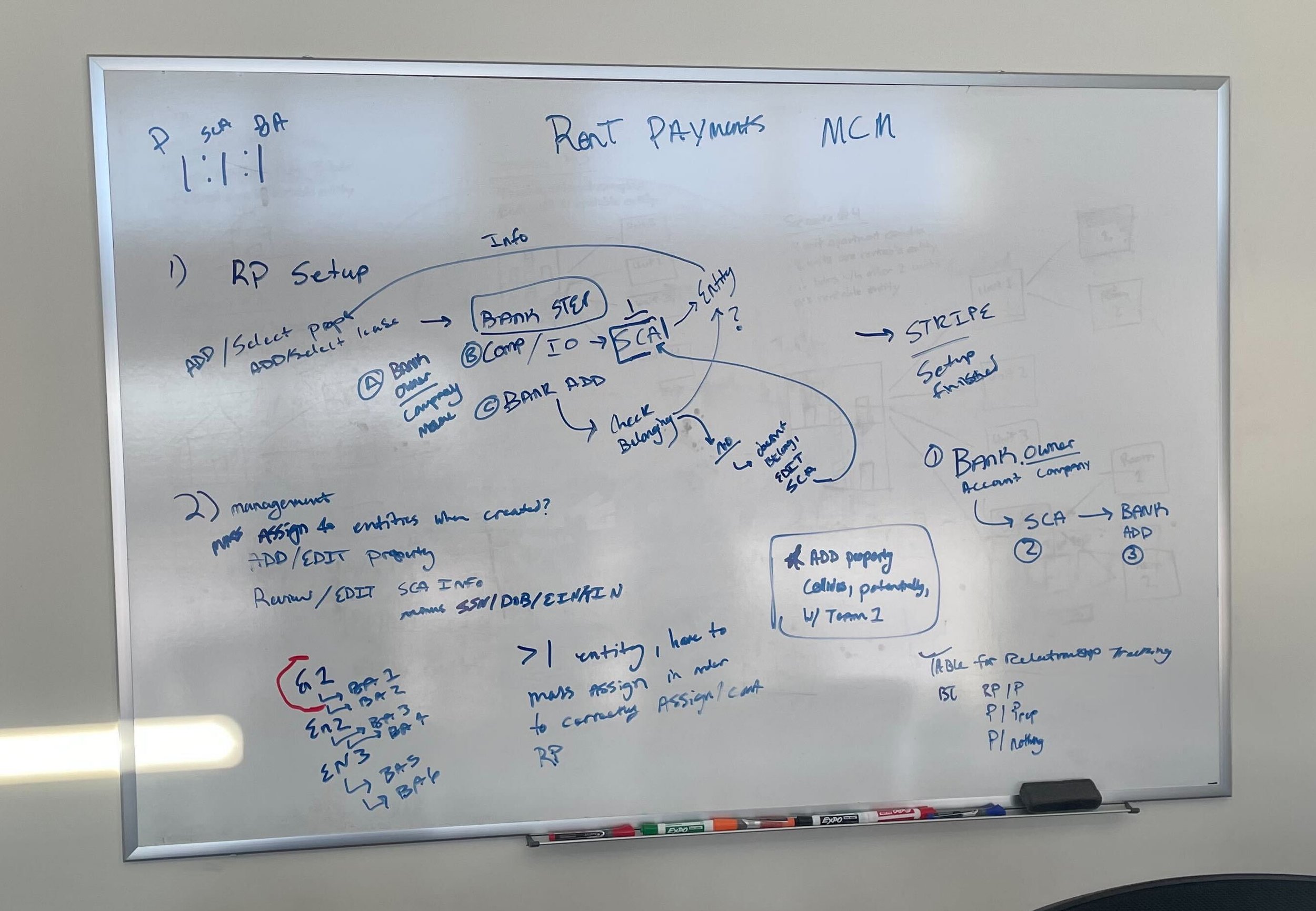
Meanwhile, Adrian and I did a whiteboarding session
Our whiteboarding yielded a simple and complex solution:
We decided to go with the simple solution and here's why:
While the problem of landlords with multiple entities was growing, it impacted a relatively small group: only 10% of landlords had multiple LLCs, and even fewer encountered issues with Stripe. Implementing a complex solution for this small segment could have negatively affected the majority of users. For these landlords without multiple entities, a simpler solution would have meant quicker and easier setup.
Additionally, further analysis of user interviews revealed a key insight: the primary need for supporting multiple entities centered around rent payments. While we wanted a solution that perfectly aligned with landlords' mental models, we prioritized addressing their immediate platform needs. Landlords primarily value adding entities to verify ownership of both the entity and bank account, confirming their identity to Stripe. Other features within the product weren't heavily used for entity-specific organization. While offering more robust entity management would be beneficial, it wasn't essential for the majority of users. Therefore, we structured the infrastructure accordingly and went with the simple solution.
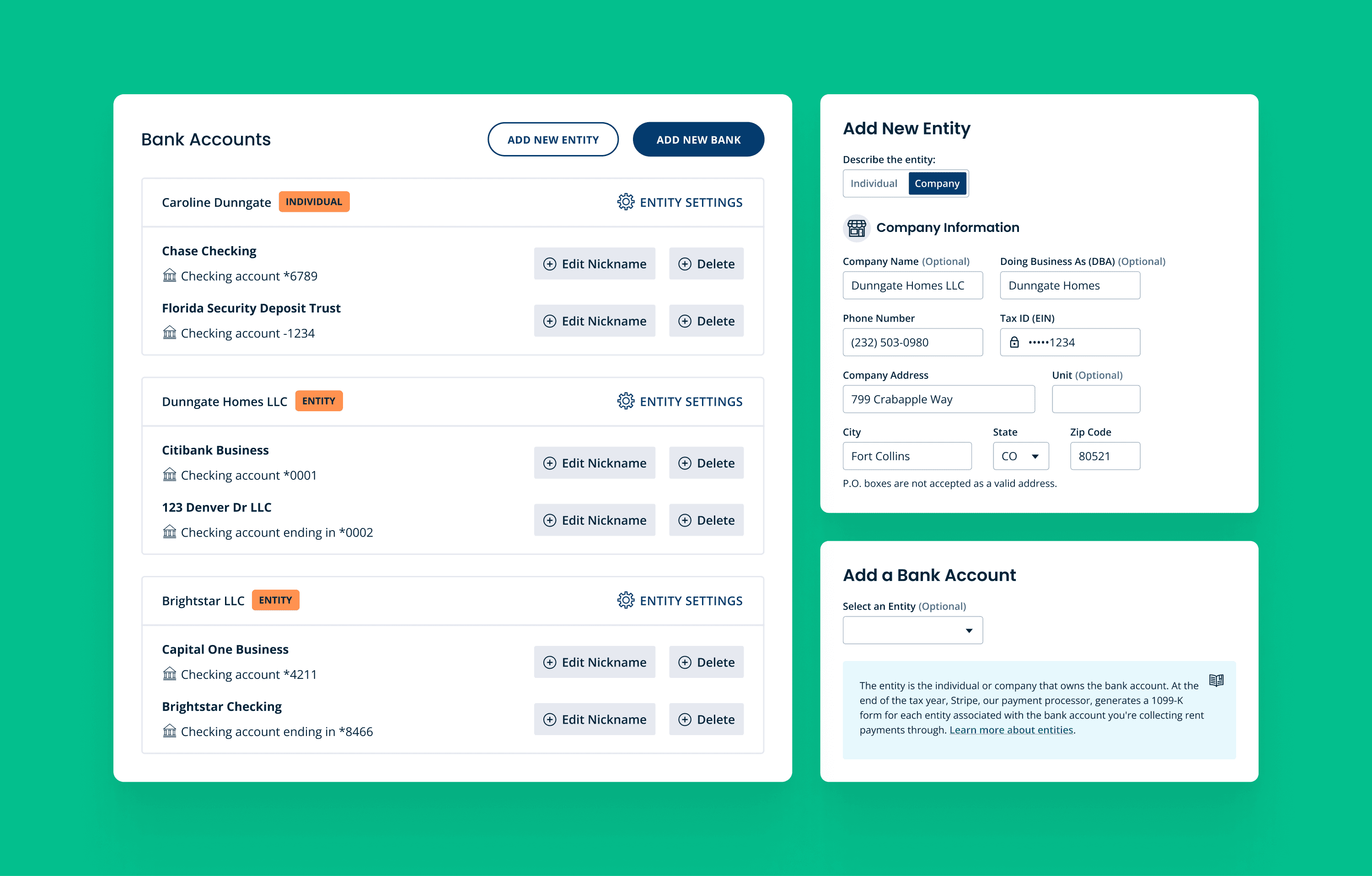
Landlords can add new entities in these relevant areas of the product:
Setting up rent payments: Create a seamless experience for landlords adding new entities while establishing rent collection.
Adding a new bank account: Facilitate linking new bank accounts to specific entities during setup.
Account settings: Provide a dedicated section within account settings for managing, adding, and deleting entities. This is also where they manage their associated bank accounts.
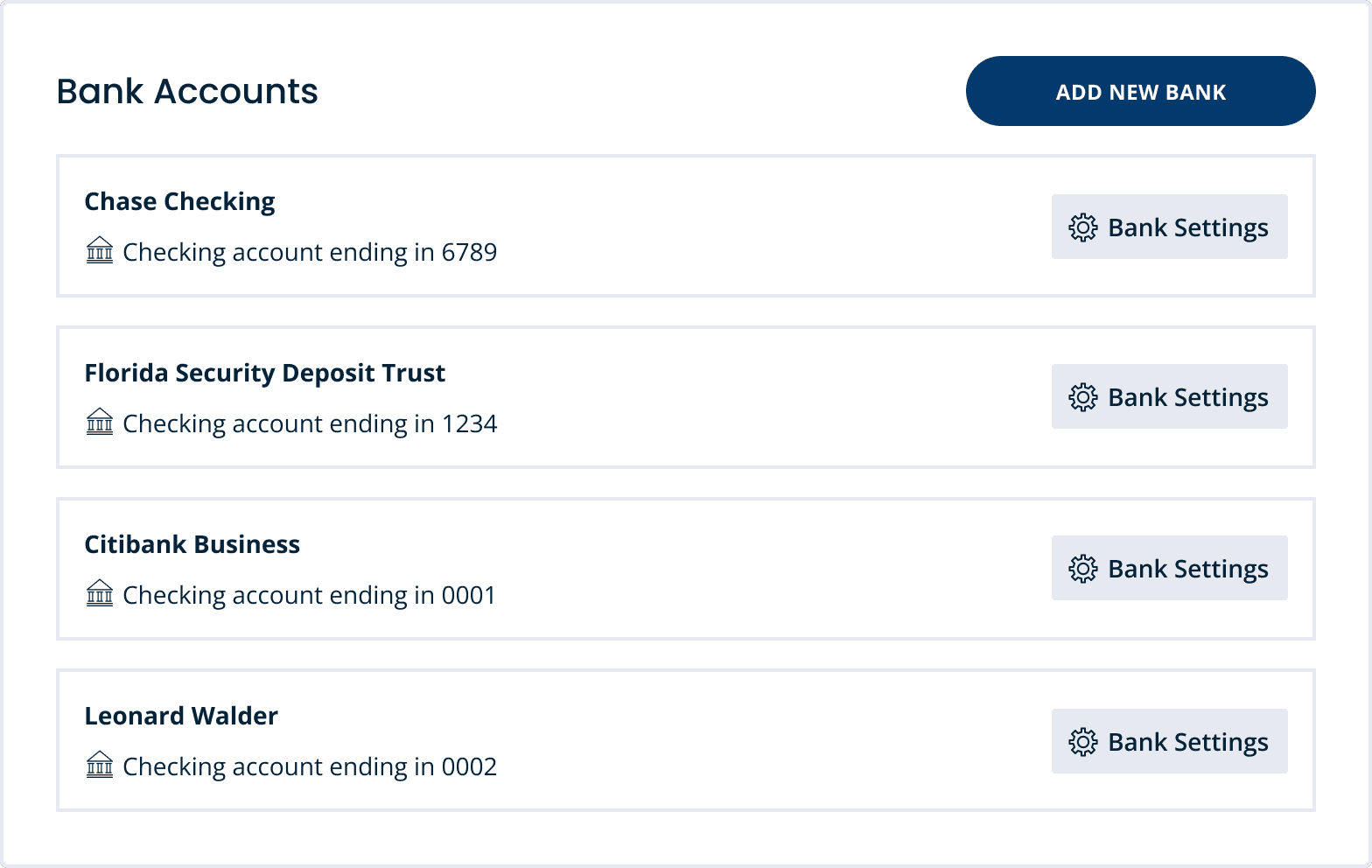
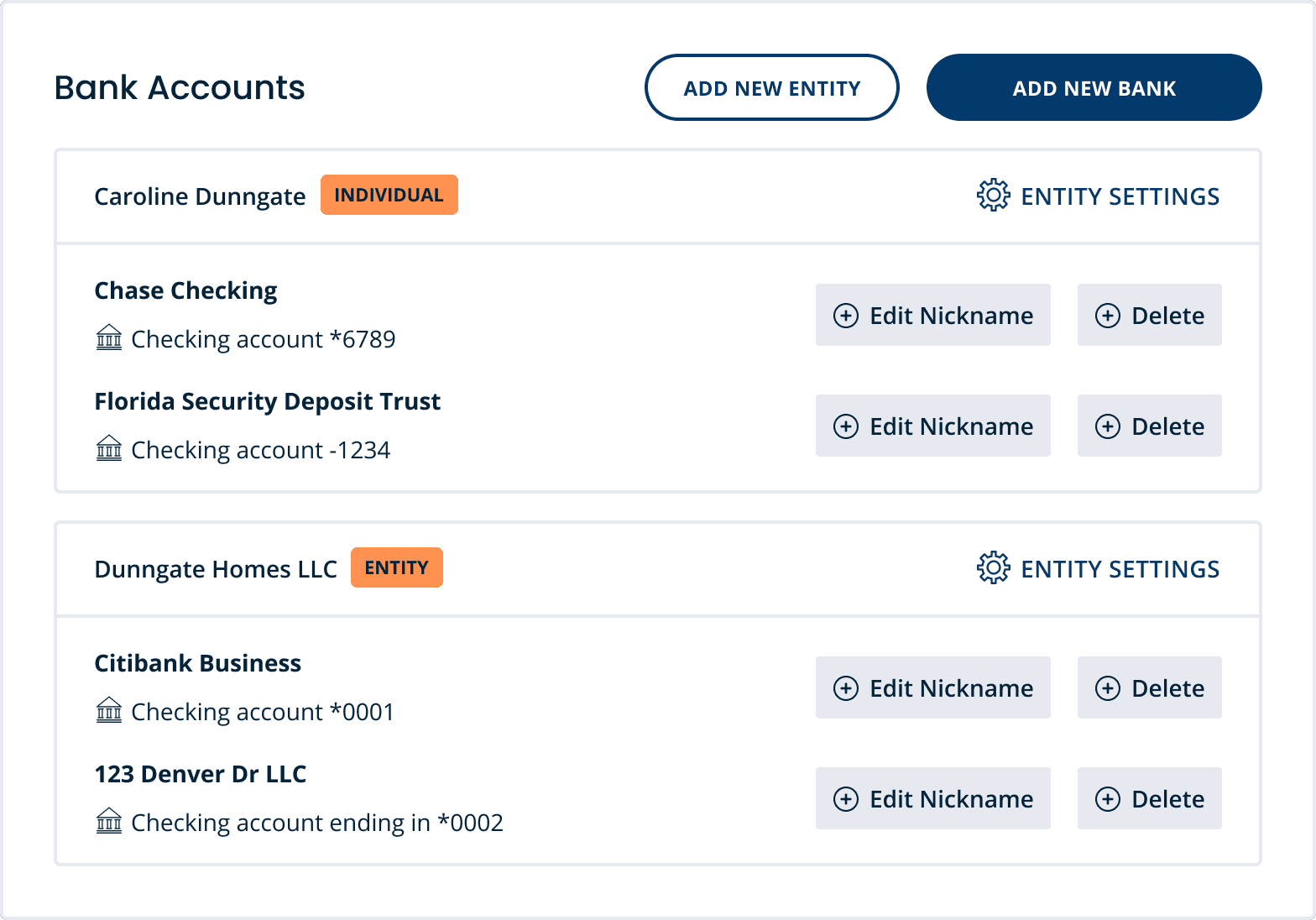
We aimed to cater to a specific group of landlords: those with multiple LLCs who desired rent collection within our existing system. Our challenge was to integrate this feature seamlessly without disrupting the established, smooth rent payment process relied upon by the majority of our users.
Through a very iterative design process with a deep consideration of the technical requirements and the user needs, we crafted an elegant and simple solution. This new feature delivers the desired impact while preserving the familiar interface and functionality that our landlords depend on.